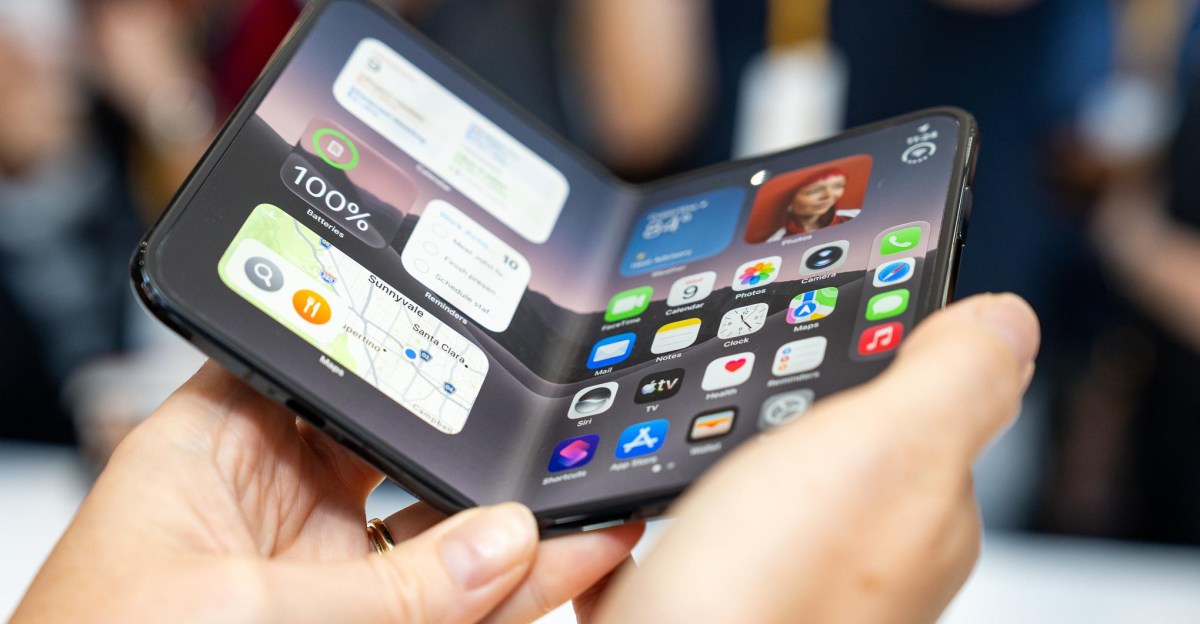
With the iPhone Duo, Apple has pulled off a familiar trick. It arrives into a mature Android foldable market with a handful of hardware features we’ve mostly already seen elsewhere, but paired with a level of software polish that makes a lot of them feel new again. It’s those software flourishes that have me excited to try the iPhone Duo when it launches next month, but I’m less convinced that its hardware will be anything special.
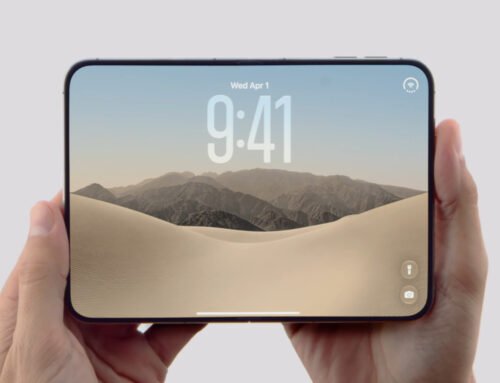
If Apple had gotten there first, the Duo’s biggest surprise would have been its squat, wide, passport-inspired shape. But its slow-moving supply chain meant that Huawei, Samsung, and Xiaomi all managed to beat Apple to market with similarly sized rivals, so the unusual design already feels fairly familiar — helped by Samsung’s aggressive efforts to market its new design.
More has been made of Apple’s efforts to eliminate the foldable display’s crease, which seem to have been largely successful. Apple attributes it to a 100-component hinge, custom adhesives that allow the display layers to “glide” over one another, and a matte finish that reduces glare and reflections to make the crease harder to spot. Trying the phone at Apple’s event yesterday, Verge editor-in-chief Nilay Patel said that you can’t really see the crease, but that “if you go looking for it, you can definitely feel one.”
It sounds, and looks, impressive, but Apple is far from the first to do it. Samsung made great strides in eliminating the crease on its Z Fold 8 and Z Fold 8 Ultra thanks to new titanium display layers. Before that, Oppo all but eliminated its Find N6 crease by using 3D printing to fill the minute gaps across the hinge. I’d have to see all those phones side by side to see which crease is subtlest, but even if Apple does win, it won’t be by much.
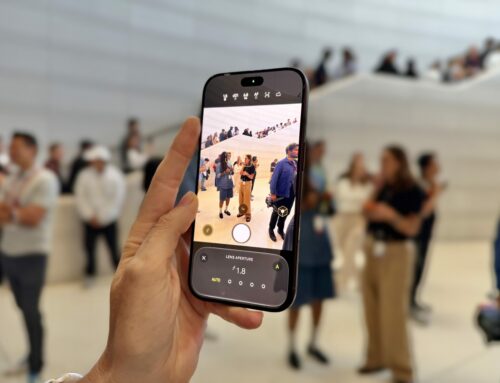
None of the iPhone Duo’s other standout hardware features are true firsts either. Google beat it to an IP68 rating, now even surpassed by Honor’s IP69. Samsung, Oppo, and Honor have all offered stylus support before — though Samsung has since dropped it. Samsung also moved on from the under-display selfie camera, which has always been hamstrung by poor photo and video quality and a distractingly visible patch on the screen.

Photo: Antonio G. Di Benedetto / The Verge

Photo: Antonio G. Di Benedetto / The Verge

Photo: Antonio G. Di Benedetto / The Verge

Photo: Antonio G. Di Benedetto / The Verge
In other ways, the hardware even feels behind the competition. The Duo is the thickest of this new wave of wide foldables, though at 5.2mm when open it’s still thinner than the iPhone Air. The weight is a more obvious issue: The 254g Duo is 26 percent heavier than the Z Fold 8 — a 53g difference — which is going to be pretty noticeable. You have to go back to 2022’s Z Fold 4 to find a Samsung foldable that’s heavier, TriFold excluded.
There’s also no evidence that Apple has adopted silicon-carbon batteries yet, which have allowed Samsung, Motorola, and other Android manufacturers to fit bigger capacities into the smaller spaces of foldable phones. Apple says the phone should still deliver a full 24 hours of regular use, but Honor’s Magic V6 uses silicon-carbon to deliver two days of life.
The rear cameras are pretty basic too, with a pair of 48-megapixel shooters and no telephoto. That’s almost an exact match for the cameras on the Z Fold 8, but Google, Motorola, Xiaomi and others are now providing capable triple cameras across their foldable lines, and the iPhone Duo already lags behind.
It looks as good as any Android foldable on paper, but it doesn’t look better than many of them
None of this is to say that the Duo looks like a bad piece of hardware. Every foldable phone is a compromise, and Apple has picked a similar set of compromises to Samsung in order to get this phone out the door at $1,999. It looks as good as any Android foldable on paper, but it doesn’t look better than many of them.
Where that might change is the software. Google has made an effort to make Android more flexible and adaptable to suit folding phones, while OEMs deliver custom solutions to push things further, but none have rewritten the rulebook quite like Apple.
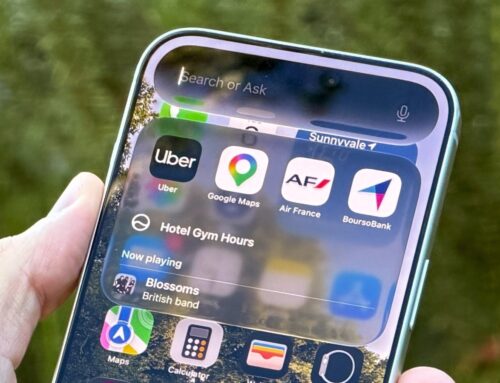
The version of iOS 27 running on the iPhone Duo isn’t the same as on other iPhones, but it doesn’t match the iPad either. The biggest change takes the dock from the bottom of the display and lays it out vertically along the right-hand side. The Dynamic Island is turned vertical and thrown in here too, while the status bar collapses into a small circular icon in the top-right corner. This big change is bolstered by clever little touches throughout, like a dynamic blur effect that shifts as you open the screen, creating a fluidity no Android foldable has so far matched. It’s a total transformation of the iOS layout that specifically has foldables in mind.

Photo: Antonio G. Di Benedetto / The Verge

Photo: Antonio G. Di Benedetto / The Verge

Photo: Antonio G. Di Benedetto / The Verge

Photo: Antonio G. Di Benedetto / The Verge
The point of all that change is to ensure consistency between the outer and inner screens. Open the iPhone Duo on the homescreen and almost everything will stay in place, making the move between screens feel seamless. That effect won’t hold in full-screen apps of course, which will adapt to fill the space, but that right-hand UI rail will be fixed. Locking the whole phone interface to the right-hand edge doesn’t sound great for left-handed users though, who are likely to find the Duo unusually awkward to use unless Apple adds the option to flip everything to the other side.
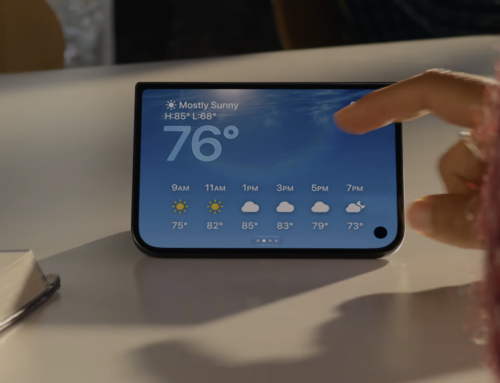
StandBy mode has also been retooled for the Duo. Prop the phone down half-open and it will enter StandBy, letting you use it as a digital photo frame, smart display, or just get quick access to a few key widgets, like the clock. Finally, the $2,000 alarm clock you’ve always dreamed of.

Photo by Antonio Di Benedetto / The Verge
Not everything is as ambitious. Multitasking looks limited so far, with the option to run two apps in split-screen, including two windows of the same app, and save pairs to reopen together. Android rivals offer similar, but support three split-screen apps at once, and often more sitting in flexible, resizeable floating windows.
But Apple’s software power doesn’t only lie in its OS. It’s the only phone manufacturer with the influence to shift the app ecosystem at large, and with the Duo it hopes to push third-party developers to adopt its best foldable features. It already showed off Netflix, Slack, and Zoom apps with custom Duo support, in some cases adapting dynamically depending on how flexed the hinge is.

Photo by Antonio Di Benedetto / The Verge
Android foldable features are still rare, with most apps simply changing size to fit the varying screens. Even that has its limits — I found a few apps ran awkwardly on the Fold 8’s short outer display. Apple is likely to have an easier time ensuring developers optimize their apps to suit both of the Duo’s displays.
Most apps do little else to take advantage of dual displays, multiple cameras, or semi-open states like a tented mode. A few video apps adapt their playback controls when foldables are half-open, but that’s about it so far. Of course, some of those app developers might take their iOS foldable features and eventually roll them out to Android too, so Apple’s advantage might not last forever.
It’ll take more time with the Duo to see exactly how it stacks up against the latest models from the Android side of life. So far it doesn’t look like Apple has surpassed its rivals on the hardware side, but its total control of software may give it an edge regardless.
Follow topics and authors from this story to see more like this in your personalized homepage feed and to receive email updates.